Skip to content
The wiring harness and electronics behind the cockpit of the 2026 car at night, April 2026

Subsystem 11 of 13

GLV

GLV includes the vehicle's control unit, data acquisition system and power distribution module, seamlessly connected through our custom wire harness.

Our capabilities

Harness mass
2.1kg
GLV supply
24 V lithium iron phosphate battery
Control
Dual VCUs, front and rear
Custom electronics
TSAL, LV motherboard, VCUs, PDM

GLV

Compact Power. Maximum Efficiency.
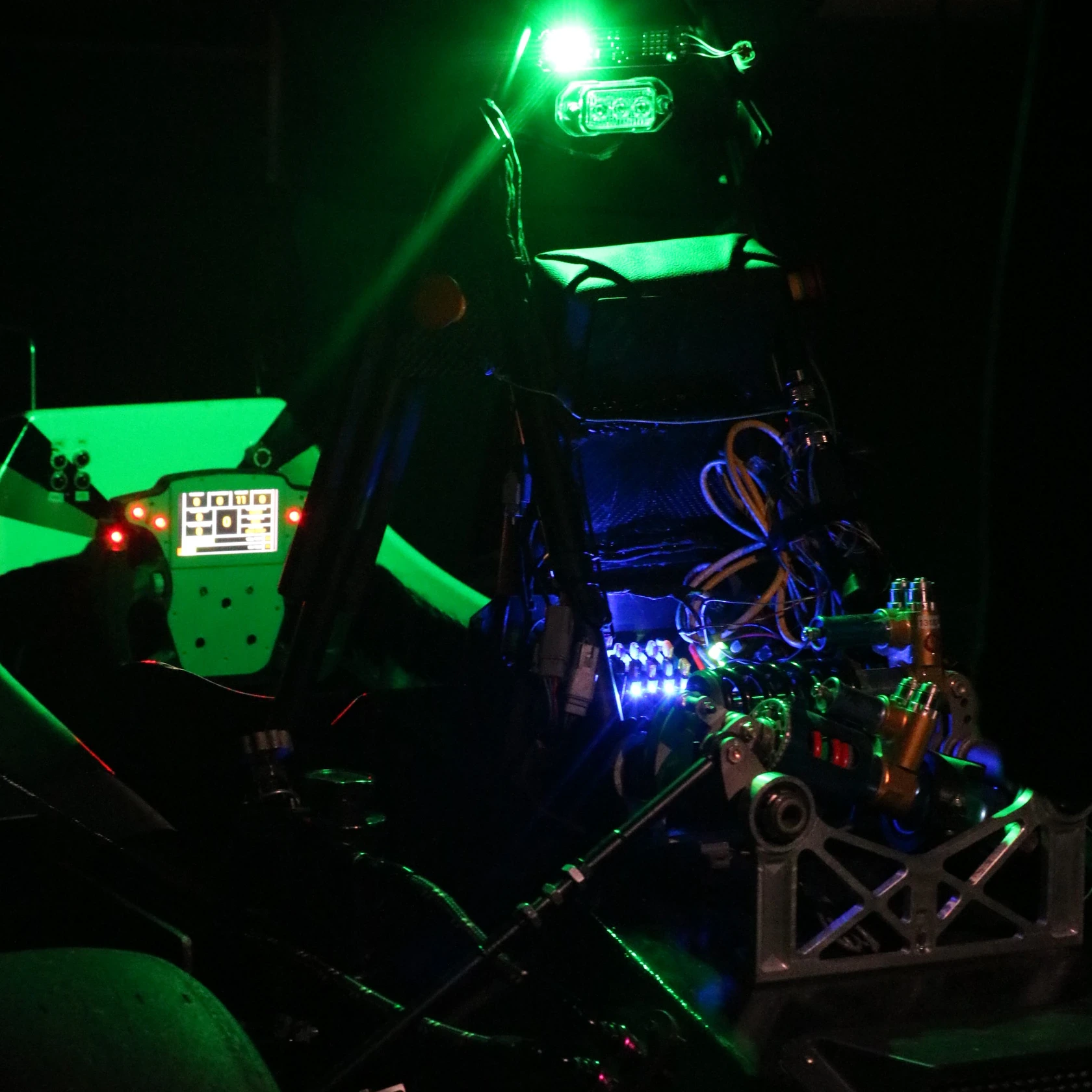
The electronics of the 2026 car lit green and blue at night, April 2026
  1. 01

    Distributed ECU

    Award-winning custom distributed ECU for vehicle control and data acquisition

  2. 02

    Signals & Software

    CANBUS communication between vehicle systems and a custom battery management system for cell balancing and thermal sensing

  3. 03

    Analog BSPD

    A new brake system plausibility device built only from analog components for deterministic behaviour.
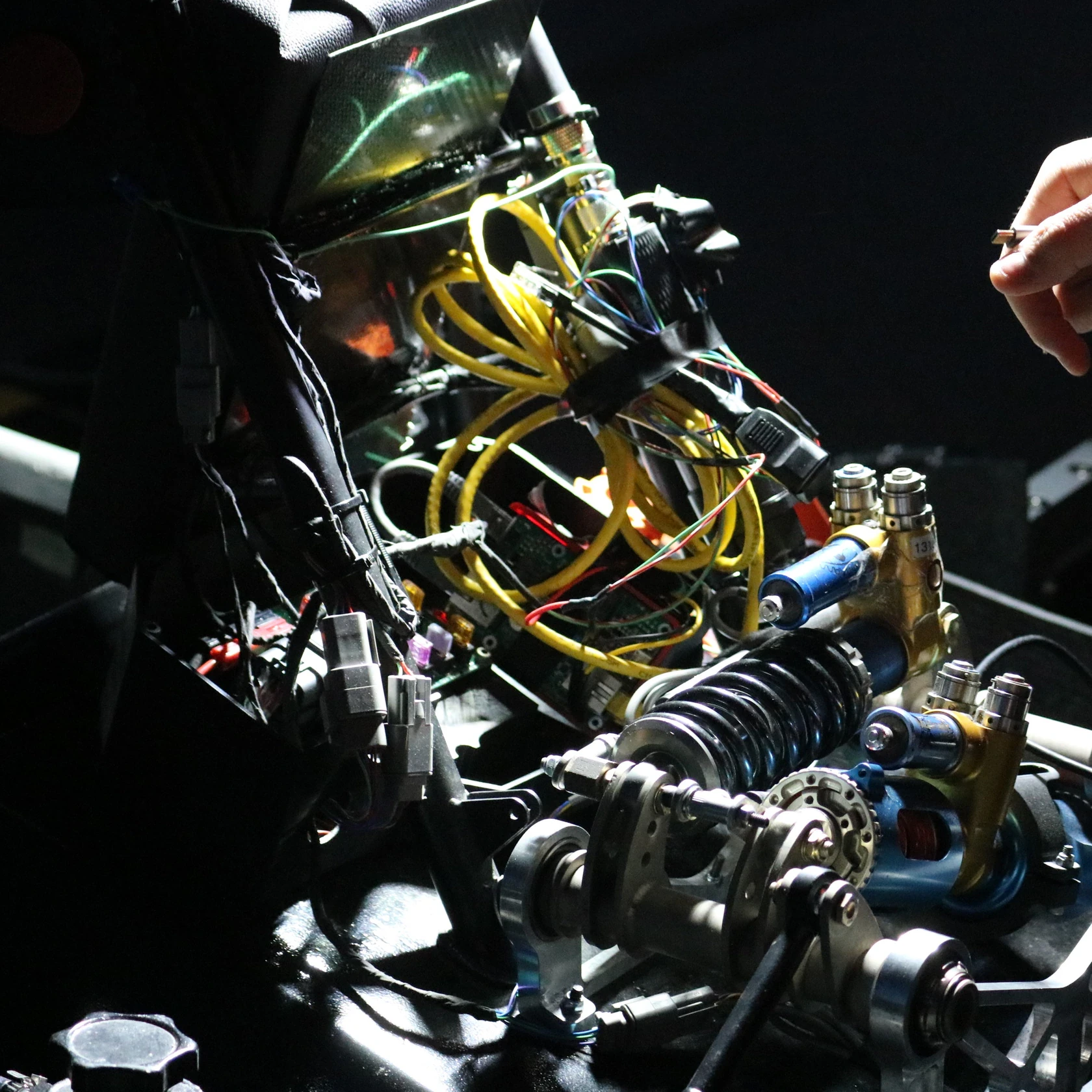
The electronics of the 2026 car lit green and blue at night, April 2026

Changing for 2027

A converter will step the pack's voltage down to 24 V to power the cooling system. The low voltage power budget keeps getting tighter, with pack cooling to run and the continuous load of an endurance run, and a converter scales with power where a bigger battery would add mass and volume. It should also mean fewer brownouts mid-drive and less swapping and charging of GLV batteries.

The power distribution module swaps the 2026 buck converter for a sponsored converter the team already has in stock. The main reasons are low voltage power telemetry and a lighter, smaller board; the rest of the 2026 PDM worked and is being refined.

The DAQ board is redesigned as a HAT on the car's Raspberry Pi 5. On the 2026 board the CAN interface did not work, and since the Raspberry Pi cannot process CAN itself, the board has to convert it to SPI. Its DC-DC converter, which also failed and was replaced off the shelf, is redesigned too.

One board will carry both the TSSI and the ready-to-move light, which improves packaging and cleans up the harness. It also lets the lights sit higher on the roll hoop: the rear wing design has been limited by the need to see them.

A screen on the charge cart, driven by its own board on the CAN bus, will show meaningful telemetry while the pack charges, instead of the team plugging laptops into CAN for a limited window.

The rear harness and electronics of the 2026 car during the April shakedown

In the making

How it works

On WFR26-E nearly every electronic part is student designed and built, including the TSAL, the low voltage motherboard, two vehicle control units and the power distribution module.

The accelerator uses two redundant position sensors; any disagreement, lost signal or fault commands zero torque.

Electronic fuses log fault events, and the brake system plausibility device was rebuilt from scratch with analog parts only. The rear harness was split into dedicated harnesses and bench tested before going in the car.

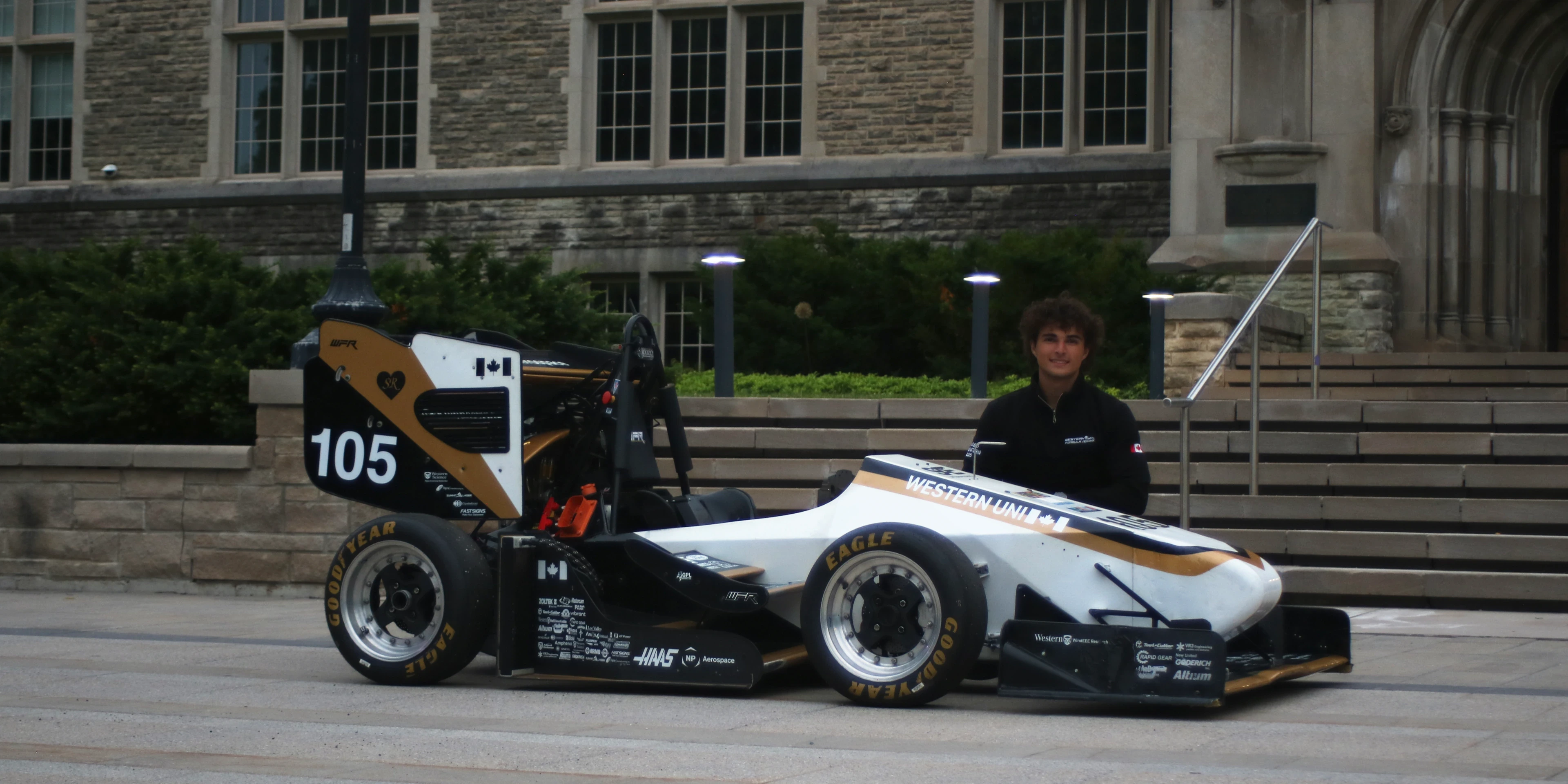
WFR26E, car 105, side-on on a stone plaza in front of stone steps, a team member standing behind it

Build the next one.

Recruitment is open. You do not need to be an engineer or know anything about racing. Bring your curiosity and we will teach you the rest.

Get in touch
Join us