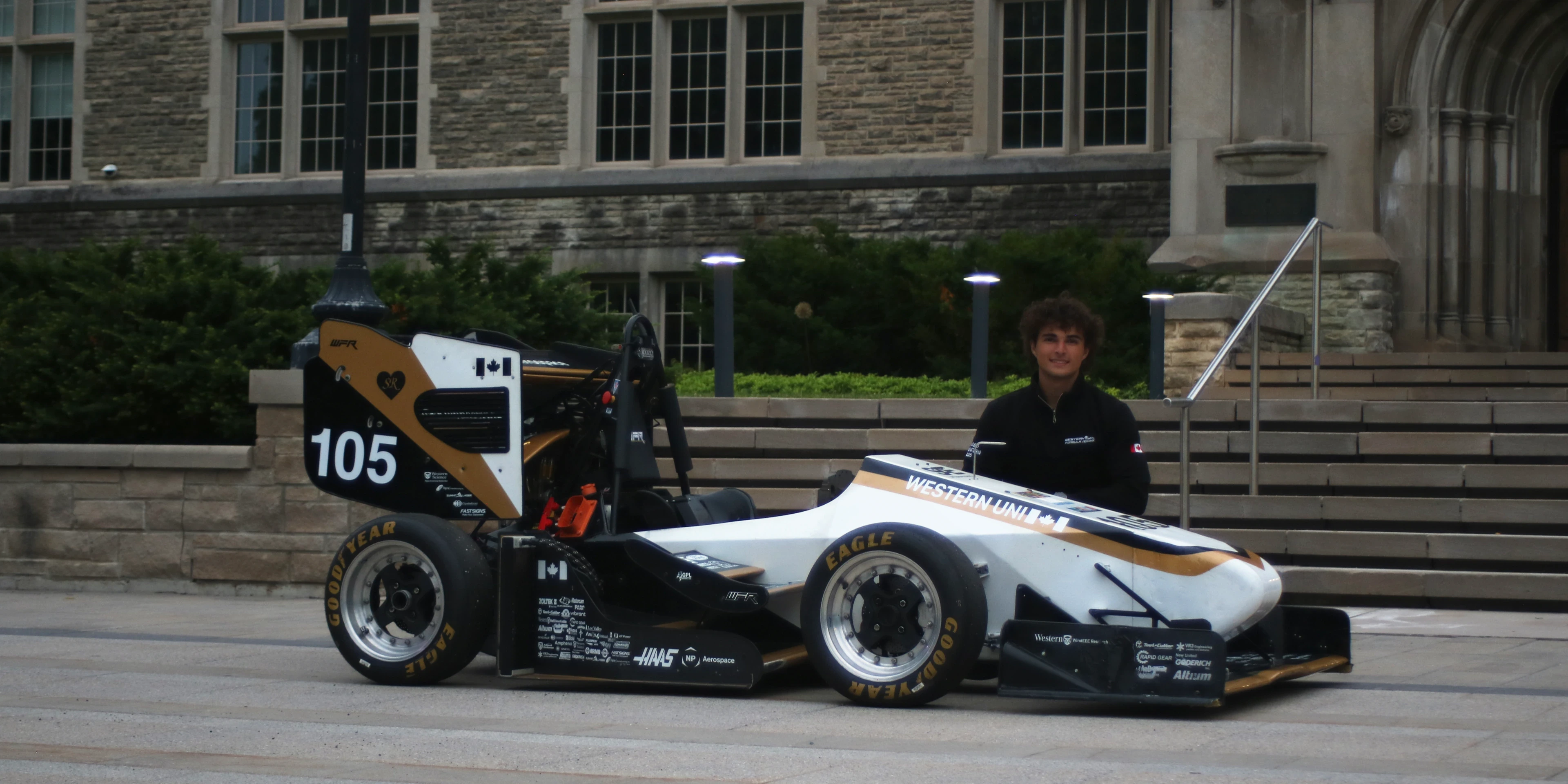
The team's own printed circuit board, a HAT on the car's Raspberry Pi 5, replaces off-the-shelf hardware. On the 2026 board the DC-DC converter and the CAN interface did not work, so an off-the-shelf converter stood in; both are redesigned so the car carries a fully working DAQ board of the team's own.

Subsystem 08 of 13
Data Acquisition
Data Acquisition works with every technical subsystem to collect, store and analyse vehicle data. For WFR26-E it moved telemetry from LTE to a 5 GHz radio link and built tools so anyone on the team can use the data.
Our capabilities
Our data acquisition team builds Western Formula Racing's telemetry pipeline end to end, from sensor to screen. A Raspberry Pi on the car reads the vehicle CAN bus and streams it over radio to our base station, where PECAN, our open-source React dashboard, renders the data live at the track. Behind it, a TimescaleDB time-series database and Grafana dashboards hold entire seasons of runs, so engineers can compare laps, validate design changes, and catch faults before they become failures.
- Telemetry link
- 5 GHz radio, replacing LTE
- Live view latency
- Under 100 ms (Project PECAN)
- In-car computer
- Raspberry Pi
- Target range
- 600 m to 1 km
Data Acquisition
Features
- 01
Live telemetry
CAN data in real time, filtered and colour-coded by category.
- 02
Flexible views
Card, list and flow layouts with interactive charts.
- 03
Season-long history
Session data stored in TimescaleDB, queryable and exportable.
- 04
Grafana dashboards
Long-run trends and lap comparison.
Changing for 2027
No WFR car has had voice between the driver and the pits: until now the driver hears about a run only at the debrief afterwards. Two-way push-to-talk lets a pit engineer watching live telemetry coach the driver straight away, and call a stop at once for safety. Push-to-talk keeps the voice load on the radio low to protect the telemetry, and a breakaway connector keeps it from slowing the driver's exit.
No WFR car has had an onboard camera synced to its data. Live video streams to Project PECAN, and full-quality recording on the car is synced to telemetry, so engineers and drivers can see exactly what the car was doing at any point in the data, for driver development and setup. The live bitrate is capped so the video never starves the telemetry.
Sensor coverage grows across the car, from tyre temperature and pressure inside the wheels to wheel speed, and a high-precision GPS/INS is under evaluation. It is part of the 2027 telemetry overhaul, aimed at reliability and consistency.
Relocating the DAQ system to the front of the car
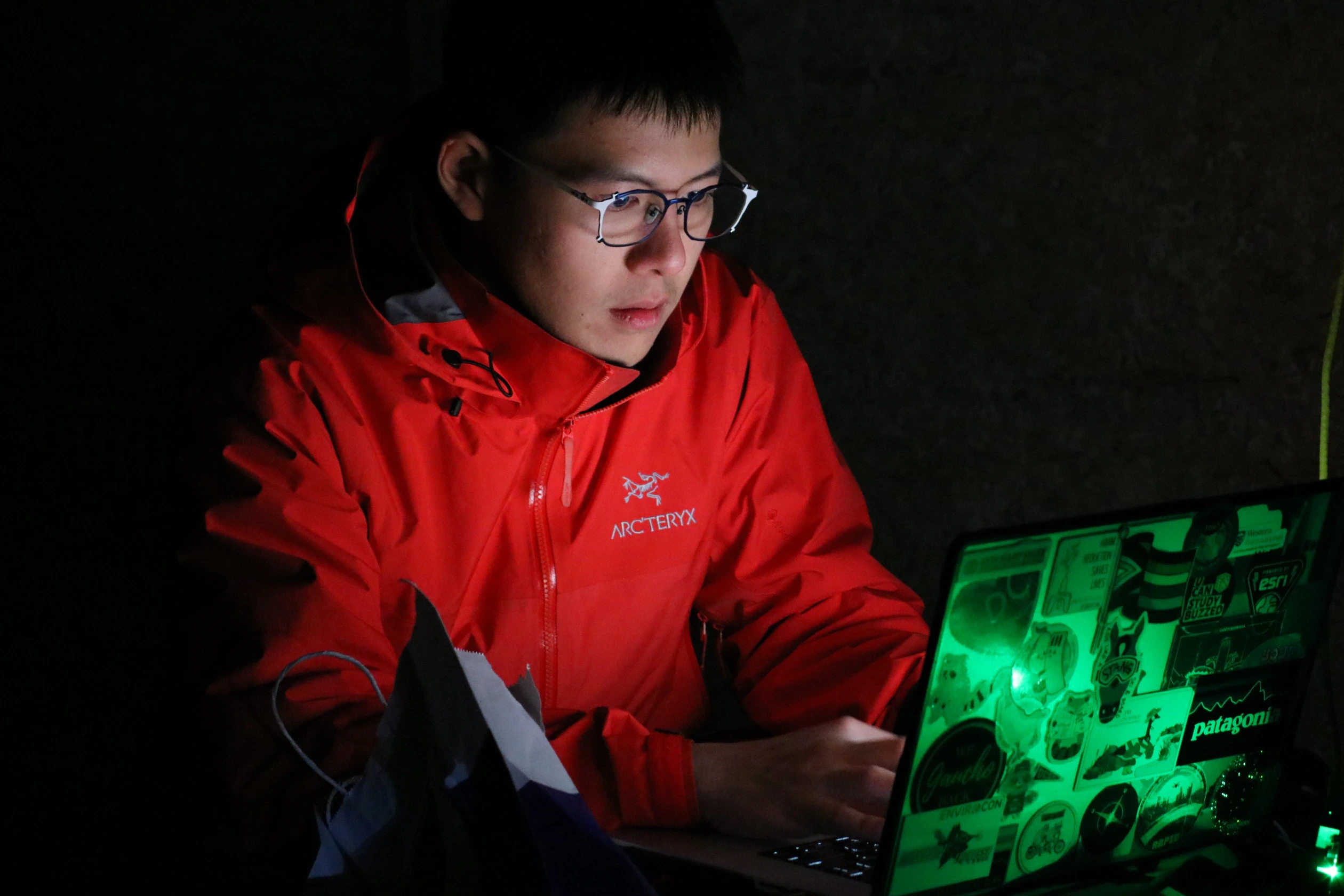
In the making
How it works
After a session, logs are uploaded to a cloud server, decoded, and stored in TimescaleDB for Grafana analysis.
Earlier seasons collected data that went unused, so the 2026 DAQ work focused on access: dashboard templates, documentation, and a natural language interface that lets team members query the vehicle database without writing code.
Live data comes through Project PECAN, the team's open-source web CAN analyser, served from a Raspberry Pi WiFi hotspot.