Skip to content
The battery pack of the 2026 car open on its cart, April 2026: BMS boards and orange high voltage cabling

Subsystem 03 of 13

Battery Pack

420V battery with five modules equipped with custom printed circuit boards enclosed in a composites case.

Our capabilities

Peak voltage
420V DC
Max fuse rating
120A
Configuration
100s6p, five 20s6p segments in series
BMS balancing
Passive, up to 420 mA

Battery Pack

Features
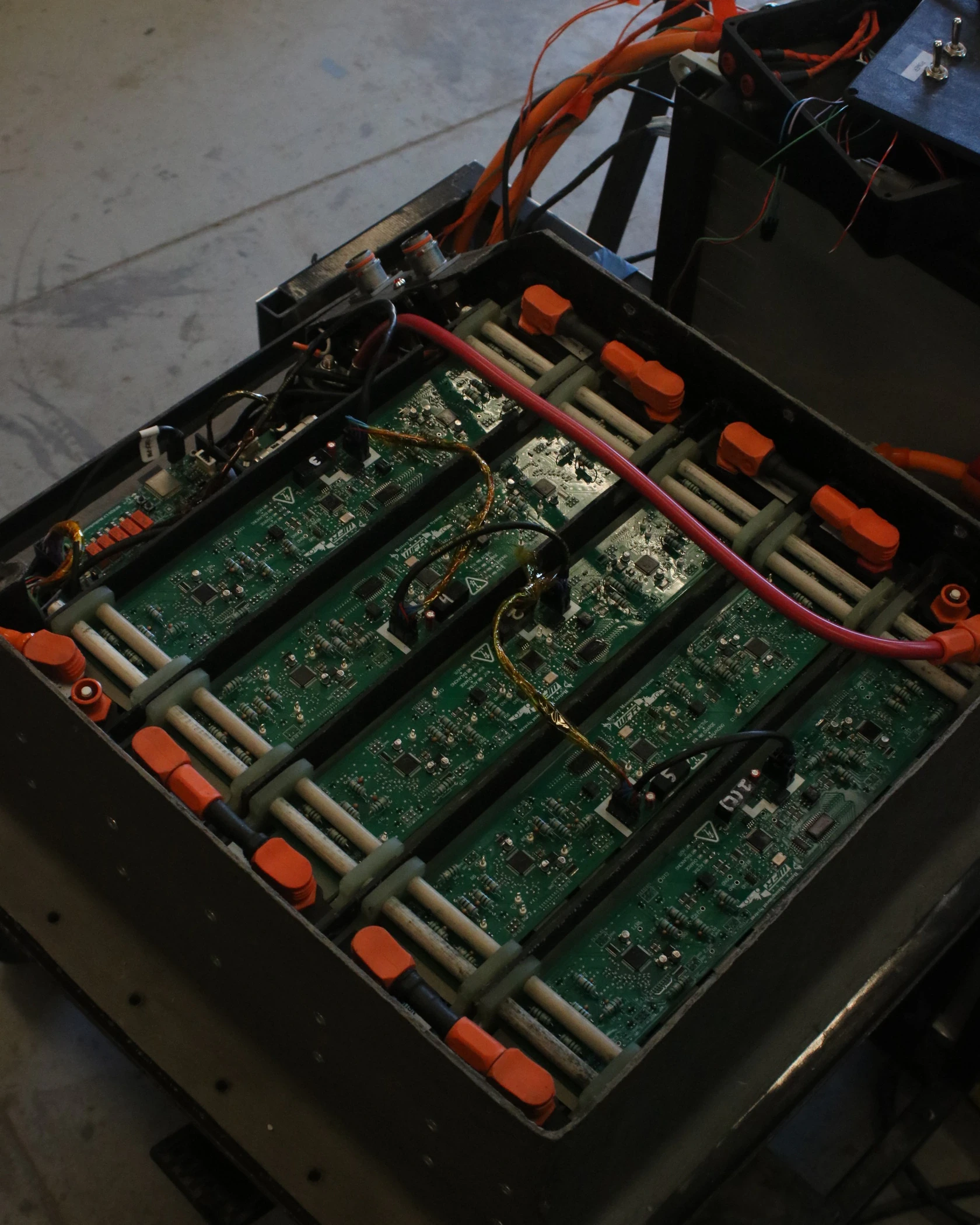
An open battery segment: BMS boards over the cells
  1. 01

    Custom BMS

    Second revision of the team's own BMS: a daughterboard per module, 4 interconnects instead of 24, and cell balancing.

  2. 02

    Separate HV and LV boards

    A dedicated high voltage interface board and low voltage control board, so faults can be isolated and boards replaced alone.
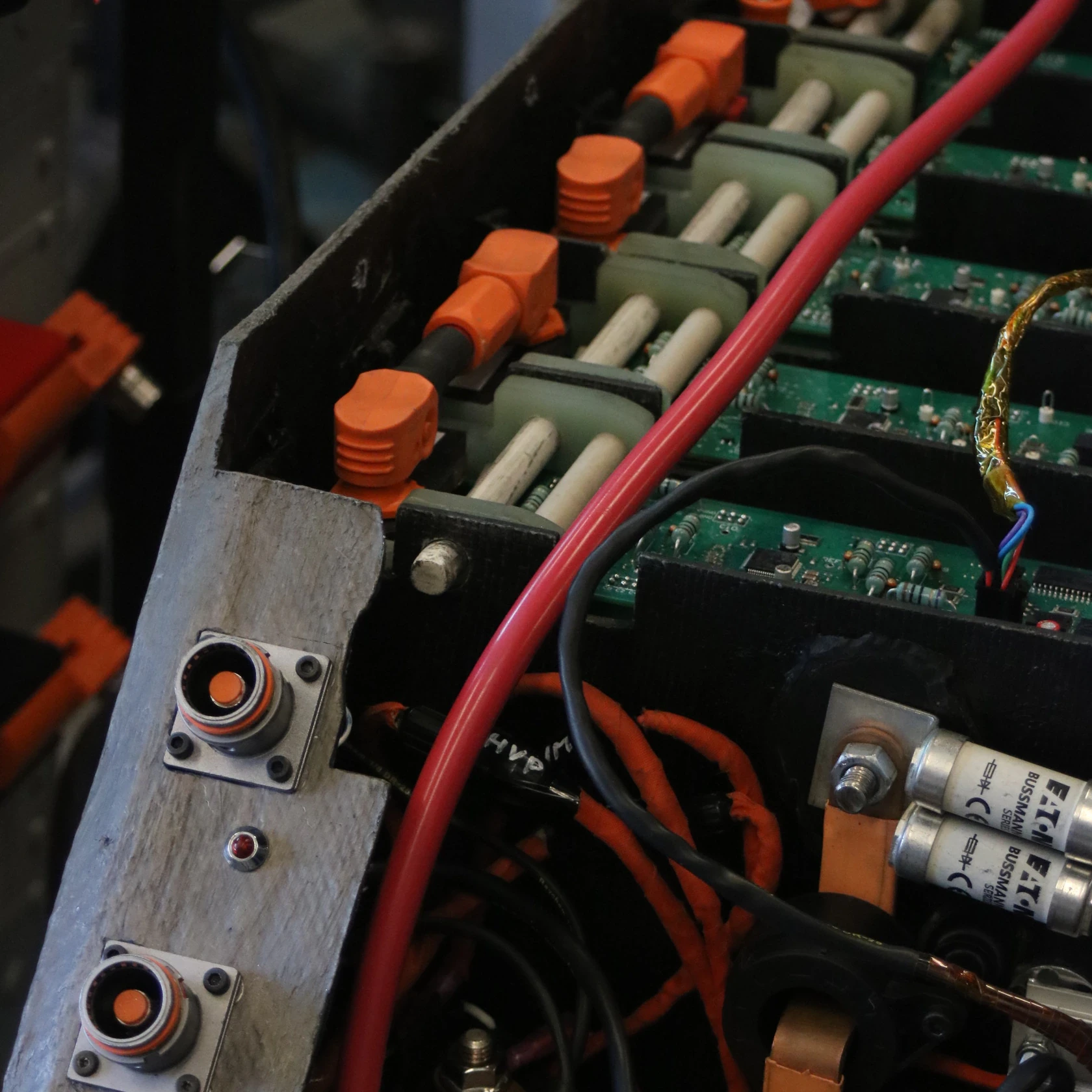
An open battery segment: BMS boards over the cells

Changing for 2027

The new pack runs at a higher voltage to get more power. It was chosen over a lower voltage layout for its performance advantage, as the team is less sensitive to mass and energy use than to speed. It is built from Molicel P50B 21700 cells.

FLAME is redesigned to fit the new pack. It collects far more data on the battery, and its state of charge estimate helps in endurance and testing. Better balancing keeps the pack healthier and saves the hours spent balancing it by hand each month, and clearer error handling makes it safer.

Side ducts will bring air to the centre of the pack and fans will pull it through the modules, with the inlet angle and cell spacing set to even out temperatures between them. Forced air scored highest in the team's cooling trade study, and the design is checked in CFD and on a 3D printed test module.

The Hall effect current sensor has been unreliable, upset by capacitive coupling and drifting with temperature, and a shunt is more accurate. With an accurate, validated state of charge model the team can use more of the pack in endurance instead of finishing with capacity to spare.

The cart is rebuilt to carry the new battery and to roll under the car on its stands without hitting the aero or the wheels. Without it the pack cannot be taken to technical inspection, and CSA certification will let the team charge without the generator.

The accumulator open on the bench: cells, orange HV connectors and BMS boards

In the making

How it works

Five segments sit in series inside the composite housing, each with garolite walls around the cells and fibreglass walls isolating it from its neighbours.

State of Charge is estimated from pack terminal voltage and shown to the driver.

Each module has a daughterboard reporting to a central motherboard, cutting interconnects per module from 24 to 4, and cell balancing doubled the previous system's current. High and low voltage circuitry were split onto separate boards to isolate faults.

Endurance validation ran 22 km at 40 km/h, with the pack starting at 25 degrees C and finishing at 41.7 degrees C.

The team has now designed five battery packs above 300 VDC, and writes its own battery management system rather than buying one.

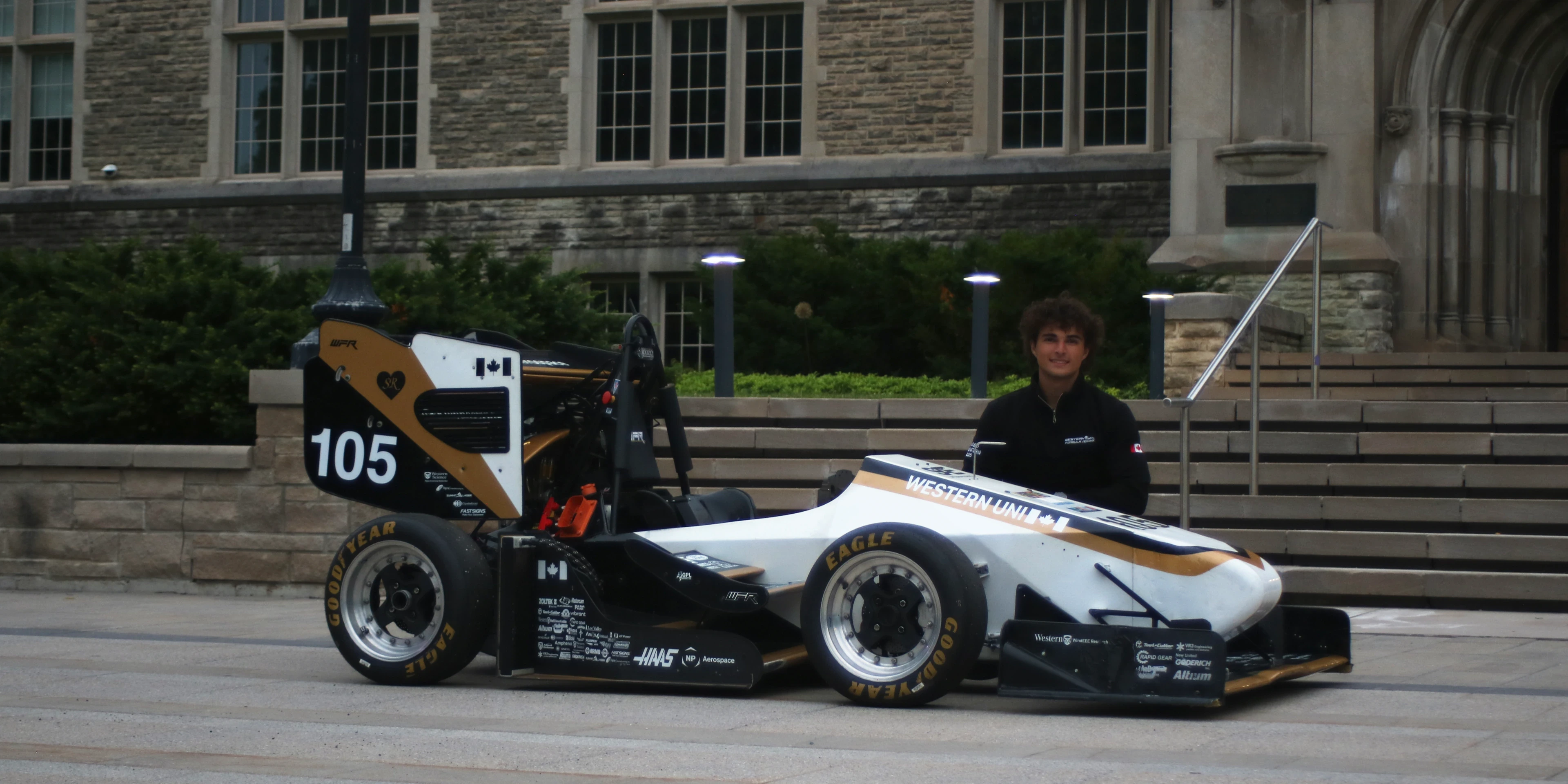
WFR26E, car 105, side-on on a stone plaza in front of stone steps, a team member standing behind it

Build the next one.

Recruitment is open. You do not need to be an engineer or know anything about racing. Bring your curiosity and we will teach you the rest.

Get in touch
Join us